
Equipment Lease Soft Costs: Unbundling & Negotiation Guide

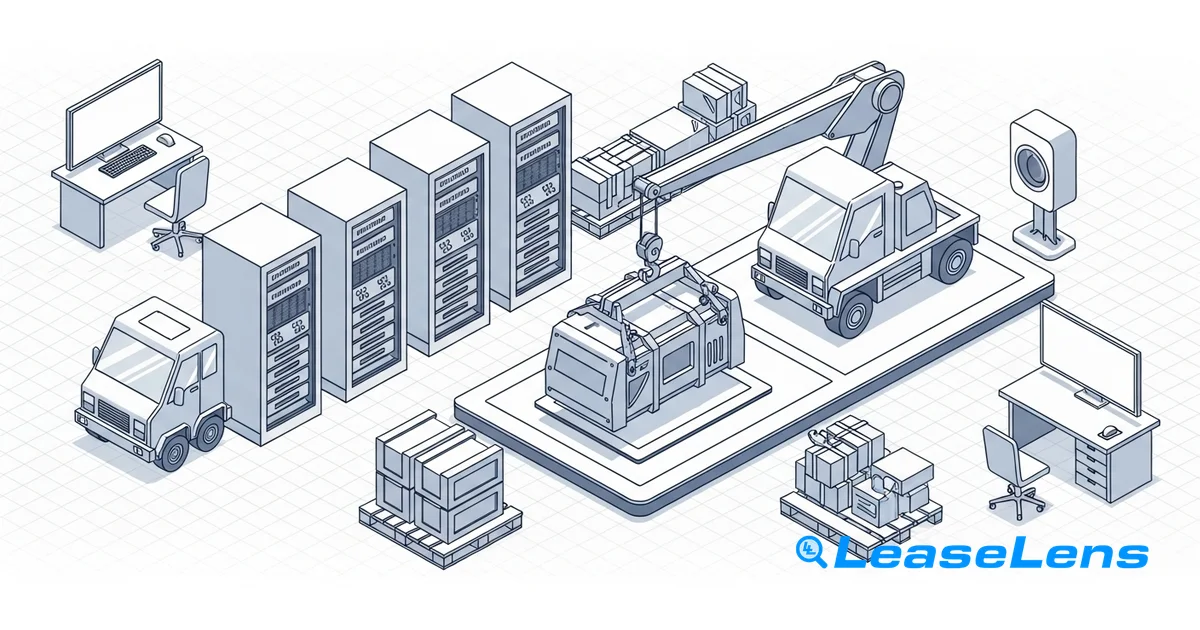
Imagine signing a lease for a $500,000 piece of heavy machinery, only to receive a first-month invoice that includes an extra $75,000 in unexpected fees. This is the painful reality of mismanaged equipment lease soft costs. Soft costs are the non-tangible expenses required to get an asset delivered, installed, and fully operational. While operations teams focus entirely on the hardware's capabilities, these invisible lease components quietly inflate your total financial commitment.
There is a massive empathy gap between procurement teams and the operations managers on the warehouse floor. Operations managers often overlook these non-tangible expenses until the final invoice arrives, leaving CFOs scrambling to adjust quarterly budgets. Failing to audit these expenses leads to bloated monthly payments that compound over a 60-month term. The cost of inaction is simply too high for modern finance teams to ignore.
The long-term financial impact of mismanaging these components is severe. Without a strategic approach to unbundling and negotiating these expenses, your company is simply burning capital. By understanding how lenders structure these fees, you can reclaim control over your equipment budgets.
Identifying the Usual Suspects: Common Soft Costs in Industrial Leasing
To stop the financial bleed, you must first identify where these expenses hide within your contracts. Common soft costs in industrial leasing span across logistics, technology, and human resources. Lease freight charges and rigging fees are prime examples of expenses that consistently catch teams off guard. Moving heavy machinery across the country requires specialized transport, which lessors gladly roll into your monthly payment at a premium.
Consider the complex logistics of installing a hypothetical MRI machine in a newly constructed medical wing. The physical asset itself is incredibly expensive, but the installation and calibration represent a massive soft cost variable. You are paying for specialized technicians, reinforced flooring, environmental shielding, and rigorous safety testing. None of these elements can be repossessed, yet they are crucial to the machine's operation.
Modern hardware also relies heavily on a complex digital layer. Software licensing, cybersecurity integrations, and proprietary operating systems are frequently bundled into the initial lease agreement. If you fail to separate these digital costs, you end up financing software at hardware interest rates.
Furthermore, you must account for personnel training to ensure your team can actually operate the multi-million dollar asset safely. Finally, consumables and initial supply kits are often quietly added to the first lease payment. These bundled extras drive up your upfront financial burden without adding any long-term equity to your balance sheet.
Navigating the 15% Rule: Why Lessors Cap Non-Asset Costs
Lessors are in the business of financing tangible collateral, not intangible services. Because of this, the industry standard dictates that lessors typically limit soft costs to 10-15% of the total contract value. From the lender's perspective, this is basic risk mitigation. If you default on the lease, the hardware can be repossessed and resold, but training and installation services have zero resale value.
This cap creates a significant "overflow" problem for businesses with highly technical setups. When specialized installation exceeds the 15% limit, you are suddenly forced to cover the difference out of pocket. This unexpected cash drain can completely derail quarterly financial planning and force operations teams to delay critical deployments.
If you operate in specialized industries like healthcare or construction, you must proactively build a business case for higher soft-cost allowances. You can often negotiate higher caps by providing lessors with detailed ROI projections and proof of strong historical cash flow. Demonstrating that the specialized installation directly extends the asset's useful life can also sway underwriters to approve a 20% or 25% allowance.
The Interest Trap: The High Price of Financing One-Time Services
Financing non-asset costs is one of the most expensive financial mistakes a growing business can make. When you roll installation fees into a long-term lease, you are effectively paying interest on a service that was completed on day one. Paying 8% interest on a one-time setup fee over a 60-month term is an incredibly poor use of operational capital.
Visualizing the total cost of service makes the math painfully clear for any finance professional. A $10,000 cash installation fee paid upfront costs exactly $10,000, leaving your future cash flow completely unburdened. If you finance that same $10,000 fee at an 8% interest rate over five years, you will pay over $12,165 by the end of the term. You are paying a 21% premium simply for the convenience of delaying a one-time payment.
This dynamic also creates a massive opportunity cost for your procurement team. Financing soft costs eats directly into your available credit lines, reducing your borrowing power for future hard assets. Furthermore, lessors often bake these service costs into the monthly rate without transparency, creating hidden interest burdens that drain your budget.
Accounting Implications: ASC 842 and Capitalizing Installation Costs
Under the ASC 842 lease accounting standard, the treatment of initial direct costs requires meticulous attention from your controller. Capitalizing installation costs into the Right-of-Use (ROU) asset is a complex process that directly impacts your balance sheet liabilities. You must clearly distinguish between costs that can be capitalized and those that must be expensed immediately to maintain strict compliance.
Generally, costs that are essential to placing the asset into service, like freight and installation, can be capitalized into the ROU asset. Conversely, initial training and general administrative costs must be expensed as incurred. Misclassifying these expenses can lead to painful audit adjustments at year-end and distort the book value of the equipment over time.
Tax considerations also play a major role in how you structure these equipment contracts. Section 179 deduction limits vary drastically depending on whether service costs are bundled into the hardware lease or billed separately. Consulting your tax advisor to separate these costs can yield substantial tax advantages during your current fiscal year.
Negotiation Strategies: How to Unbundle and Optimize Your Lease
You cannot optimize what you do not separate during the procurement phase. The "unbundling" technique is your strongest defense against inflated lease costs and hidden lender margins. By separating the hardware quote from the service quote, you force the lessor to provide total transparency on their markup.
You should also negotiate "net-zero" freight by leveraging your own logistics providers instead of defaulting to the lessor's preferred vendors. Lessors often upcharge freight services by 15% to 20% as a hidden profit center. Additionally, insist on progress payments for installation to ensure you do not pay interest on services until they are actually performed.
It is highly critical to watch out for an evergreen clause attached to bundled software or maintenance agreements. In simple terms, an evergreen clause is a sneaky contract rule that automatically renews your lease or service agreement for another full year if you do not send a cancellation notice exactly on time (usually 60 to 90 days before the contract ends). Unbundling helps you spot these auto-renewals before they lock you into paying for outdated software.
Use this line-item transparency checklist during your next RFP process to protect your budget:
Request completely separate line items for hardware, software, freight, and installation.
Demand a detailed breakdown of the implied interest rate for all non-asset costs.
Require all maintenance and software agreements to clearly state their renewal terms to avoid auto-renewals.
Cross-reference the lessor's freight quote against two independent logistics bids.
Verify that initial training costs are billed as a one-time fee, rather than capitalized into the principal.
Modernizing Management: Moving Beyond Spreadsheets for Soft Cost Tracking
Relying on manual spreadsheets to manage complex equipment portfolios is a recipe for financial disaster. "Spreadsheet blindness" occurs when decentralized tracking leads to missed soft cost variables and unexpected auto-renewals. When critical contract details are buried in static cells, operations managers lose visibility into the true cost of their assets.
LeaseLens centralizes all your soft cost data to provide a highly accurate Total Cost of Ownership (TCO). By moving away from manual entry, you eliminate the risk of human error and gain real-time visibility into every lease component. This centralized approach empowers CFOs to make strategic capital allocation decisions based on actual, verifiable data.
Our platform automates alerts for software license renewals and training recertifications that are often quietly bundled into leases. By using these data-driven insights, you can negotiate significantly better terms on your next equipment acquisition. Stop letting invisible costs drain your budget, and start managing your leases with the precision your business demands.