
Commercial Print Equipment Lease Management & Click Charges

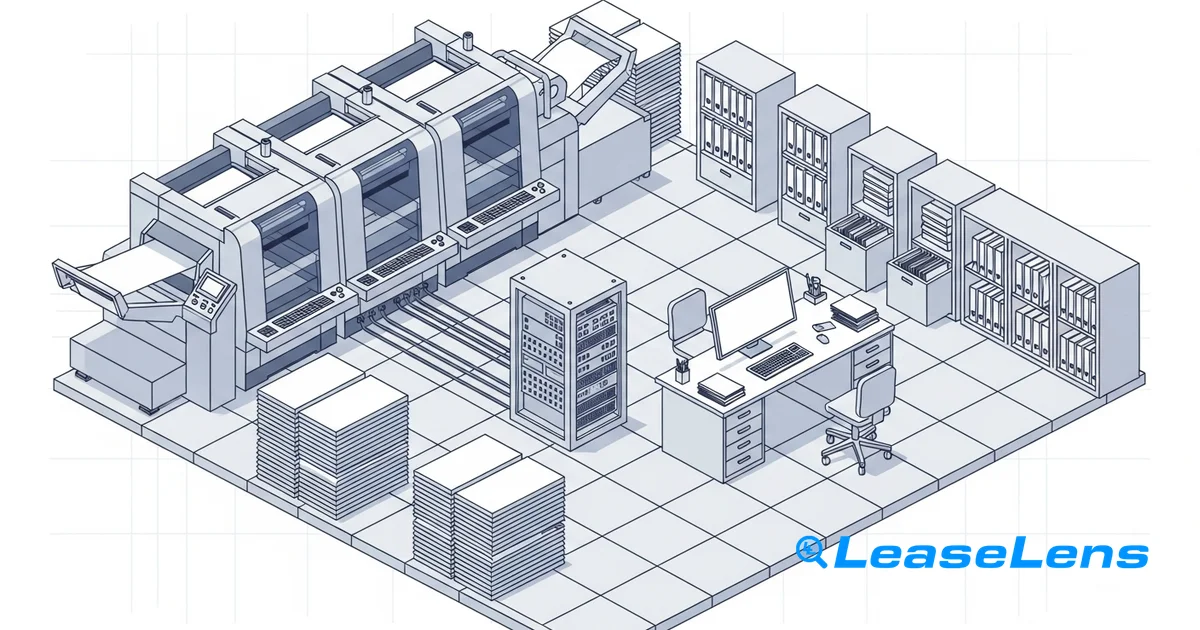
Commercial printing operations run on heavy iron and tight margins. Whether your shop relies on a fleet of HP Indigo digital presses, Heidelberg Speedmaster offset machines, or Horizon perfect binders, commercial print equipment lease management requires a totally different playbook than standard financing. You aren't just financing the metal; you are financing the usage.
What to know about leasing commercial print equipment: Unlike a standard fixed-term equipment loan, a commercial printer lease includes complex usage components called click charges, which bill you per impression. If you fail to actively manage your base volumes, overage tiers, and maintenance escalators, these usage fees will rapidly destroy your profit margins.
The reality of thin margins in commercial printing means a fraction of a cent changes everything. A $0.002 difference in click charges on a high-speed inkjet press running 5 million impressions a month evaporates $10,000 in pure profit before you even notice the billing creep.
Your equipment dealer isn't incentivized to help you track these overages. Their revenue model relies heavily on the service and supply margins baked into those click overages, meaning you are completely on your own when it comes to click charge management.
Understanding Common Print Industry Lease Structures
Before diving into click charges, you must understand the paper you are signing. The commercial print industry primarily relies on two lease structures: the Fair Market Value (FMV) lease and the $1 Buyout (Capital) lease. FMV leases offer lower monthly payments and are standard for rapidly depreciating digital presses, but they expose you to end-of-term valuation risks. Conversely, $1 Buyout leases are essentially financing agreements best suited for heavy iron like offset presses or industrial cutters that hold their value for decades.
The Reconciliation Nightmare: Auditing Clicks vs. Tiers
Decoding the click charge requires understanding exactly how your base volumes and overage tiers are structured. Most commercial printer leases establish a minimum monthly volume you pay for regardless of actual usage, coupled with escalating tiers for overages. If your shop hits a slow season, you eat the base cost; if you land a massive direct mail contract, you get hammered by high-velocity overage penalties.
The auditing gap is where most print shops bleed cash. Relying on manual meter reads or trusting the dealer's automated billing system leads directly to overpayment. You must implement strategies for reconciling your monthly usage against the lease-specified tiers to spot billing creep before it becomes a permanent line item on your P&L.
One of the most effective ways to protect your margins is negotiating "rollover clicks" during the initial printing equipment financing discussions. Ask your lessor to allow unused impressions from a slow Q1 to roll over and offset the inevitable spikes during your Q4 holiday rush. If your dealer refuses to negotiate rollovers, you need to lower your base volume commitment and negotiate a flat overage rate.
Fleet Chaos: Centralizing Management Across Digital and Offset
Most commercial print shops operate as "Frankenstein" facilities, pieced together over decades. You end up managing disparate lease terms for digital presses, legacy offset machines, and specialized finishers, all operating under different master agreements. This decentralized approach creates a logistical nightmare for your operations manager and your controller.
This chaos inevitably leads to "orphan" machines sitting in the corner of your pressroom. These are older units, like an aging Ricoh Pro series, that have stopped producing meaningful revenue but continue to pull monthly maintenance fees and base click charges. Without centralized management, these zombie leases drain your operating capital month after month.
The solution is negotiating a master lease agreement for multi-unit fleets to synchronize expiration dates and service levels. By consolidating your copier lease usage fees and heavy press agreements, you gain the leverage to shift volume between machines. If one digital press is nearing its overage tier, centralized data allows your production manager to route the remaining jobs to a machine that is still under its base volume.
The 'Step-Down' Strategy: Negotiating Rates for Aging Iron
The paradox of aging print equipment is a massive blind spot for shop owners. As a machine reaches its fourth or fifth year of service, its competitive value drops while its maintenance costs rise. Yet, most standard commercial print leases lock you into the exact same base click charge on day 1,500 as you paid on day one.
You must negotiate "step-down" usage rates that decrease as the machine ages. If you are signing a 60-month lease on a Konica Minolta AccurioPress, the click rate in years four and five should be significantly lower than in years one and two. You are dealing with older technology that requires more operator intervention, and your lease structure should reflect that reality.
Always link your service level agreements (SLAs) directly to your click charges. If the machine's uptime drops below 95%, your click cost should automatically decrease for that billing period. You also need to protect your shop against "maintenance escalators" hidden deep in the fine print of printing equipment financing. Lessors often sneak in clauses allowing them to raise service rates by 5% to 10% annually, wiping out your margin on long-term client contracts.
The 'Return to Hub' Trap: The Hidden Costs of Saying Goodbye
Returning commercial print equipment is never as simple as loading it onto a truck. The shock of the final invoice often hits when shop owners realize who is contractually responsible for specialized crating, rigging, and freight. Moving a 10,000-pound digital press requires specialized logistics, and your lease likely places every penny of that burden on your shoulders.
Understanding the difference between "FOB Origin" and "FOB Destination" is critical when negotiating your return provisions. If your lease specifies FOB Destination, you are paying the freight to ship that massive press across the country to the lessor's designated warehouse. You must identify and cap these de-installation and return fees during the initial lease negotiation, not when the truck is idling at your loading dock.
You also must maintain strict insurance requirements during transit. You are entirely liable for the machine until it is inspected and accepted at the lessor's facility, meaning you must carry insurance on equipment you no longer use. Negotiate to have your liability end the moment the rigger's truck leaves your facility to avoid catastrophic claims on damaged returns.
Economic Life vs. Lease Life: Avoiding the Auto-Renewal Pitfall
In the commercial print industry, the "economic life" of a machine ends when the cost of operation exceeds the value of its output. Unfortunately, the "lease life" often extends far beyond this point due to predatory auto-renewal clauses. This is how obsolete print technology stays on your floor through simple administrative oversight.
Consider this realistic scenario: A mid-sized print shop in Chicago leased a high-volume EFI VUTEk UV flatbed printer on a 48-month FMV lease. The operations manager tracked the expiration date but missed the 90-day written notice window buried in the master agreement. Because they failed to send a certified letter by the exact deadline, the lease automatically renewed for an additional 12 months, costing them $36,000 in unexpected lease payments for a machine they had already replaced.
To survive, you must set hard stops in your operational workflow. Your lease management system needs to alert you 180 days before the notice period begins, not the expiration date. This gives you the buffer needed to evaluate the secondary market, negotiate a buyout, or arrange for de-installation.
When dealing with an FMV structure, this proactive timeline prevents the lessor from overvaluing a machine that has absolutely no secondary market value. The Fair Market Value gamble is heavily weighted in the lessor's favor unless you have the time and data to challenge their assessment.
Conclusion: Taking Control of Your Print Infrastructure
True lease ROI in commercial printing isn't found in the base monthly payment. It is hidden in the click charges, the maintenance escalators, the return provisions, and the auto-renewal traps. Mastering these levers separates the highly profitable print shops from the ones struggling to keep their doors open.
It is time to shift from reactive to proactive lease management. Tracking multi-million dollar equipment fleets on static spreadsheets guarantees you will miss critical deadlines and overpay on usage fees. You need centralized visibility into every master agreement, SLA, and notice window across your entire pressroom.
Treat your lease portfolio exactly like your daily production schedule—monitor it daily or lose money. Your practical next step today: Pull your three most expensive equipment leases and identify the exact date your notice window opens. Put that date on your calendar right now, and start negotiating your next move before the lessor makes it for you.